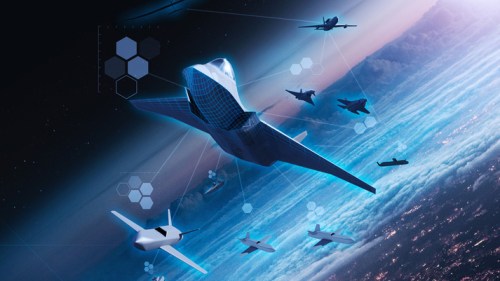
Funding for the ‘Tempest’ Future Combat Air System which is intended to replace the RAF’s Typhoon aircraft is “significantly less than required” and “adds significant overall programme risk” to delivery of the new jet, according to a report on government project management published jointly by HM Treasury and the Cabinet Office.
In its first assessment of the Tempest programme the Infrastructure and Projects Authority (IPA), which reports jointly to the two government departments, reveals that successful delivery of the aircraft is already “in doubt”. Another high profile drone project, delivery of the RAF’s new ‘Protector’ aircraft, rated a similar assessment.
Tempest is under joint development by Italy, Sweden, and the UK as the next generation combat aircraft for the three nations – a high performance, high cost system consisting of a core aircraft, which is likely to be able to fly in both crewed and uncrewed modes, with an associated network of swarming drones, sensors, and data systems.
The IPA, which each year rates the performance of government departments in delivering major projects, has scored the Future Combat Air System programme with an Amber / Red risk rating in its report for the 2020-21 financial year. This means that “successful delivery of the project is in doubt, with major risks or issues apparent in a number of key areas. Urgent action is needed to address these problems and assess whether resolution is feasible”. Read more
 New details about the British government’s plans to allow US defence manufacturer General Atomics to conduct experimental flights of its new SkyGuardian drone in the UK this summer have emerged in
  Documents obtained by Drone Wars using the Freedom of Information Act (FOI) reveal how British military officials view the UK’s next generation armed drone, known as Protector, and the types of advanced capabilities the aircraft will have. Protector, which is set to replace the UK’s current fleet of armed Reaper drones in the mid-2020s, is essentially SkyGuardian—the latest version of the Predator drone being produced by General Atomics—plus UK modifications. The modifications revealed in
  Since 2010, Drone Wars UK has been shining a spotlight on the military’s use of drones and the impact on peace and security around the globe. Now, both in the US and in Europe, large military-grade drones which fly ‘beyond visual line of sight’ (BVLOS) are moving from the battlefield to the domestic front.
