The Attack Killed Them: Drone Warfare and the Exonerative Voice

Language is one of the most powerful political weapons. The ability to choose how state violence, such as drone warfare, is described is the ability to attempt to determine how it is understood. Consider the difference between the word ‘murder’, for example, and the word ‘neutralisation’. Though they can both be used to mean the same thing – the deliberate killing of a person – the word ‘murder’ is vividly emotive, whereas ‘neutralisation’ is vague, bureaucratic, and sterile. To say that a drone has been used to murder a person sounds much more negative – violent, gruesome, even – than to say that it has been used to neutralise a threat. For ‘neutralisation’ we could substitute, perhaps, equally banal words such as ‘interdiction’ or ‘prosecution’, lofty-sounding technical words with an aura of expertise and formality but which are also difficult to pin down to a precise meaning.

Language, that is to say, often masks the horrors of drone warfare in ways that subtly work to sanitise and legitimise it. One of the key claims about drone warfare, after all, is that it is uniquely positioned to minimize harm, with the metaphors of ‘surgical precision’ and ‘pinpoint accuracy’ being used to suggest that drone strikes are a particularly clean, and therefore proportionate and defensible, form of aerial bombardment. But it is not only such clear uses of metaphor that function to obscure the nature of drone killing. Very often we see the use of what has become known as the ‘exonerative voice’ or the ‘past exonerative tense’, which is a specific way of constructing utterances in order to simultaneously declare that violence has been done and to obscure responsibility for that violence. When exonerative language is used to describe state violence, we are made aware of this violence in a specific way: a way that makes it seem perhaps accidental, or inevitable, or a benign or unimportant by-product of an automatic and legitimate process. Violence appears as anything but violent.

The Politics of Grammar

Perhaps the most direct way to explain the exonerative voice is through examples. Discussing the ubiquitous phrase “mistakes were made,” John Broder writes that this particular piece of innocuous-sounding jargon “sounds like a confession of error or even contrition, but in fact, it is not quite either one. The speaker is not accepting personal responsibility or pointing the finger at anyone else.” It is a linguistic sleight of hand through which people can simultaneously admit that something disagreeable happened and hide the fact that this disagreeable thing was an act (often a deliberate act) of wrongdoing for which people or groups can and should be held accountable.

Many writers have pointed out that this specific linguistic trick is often used to describe police killings. In a satirical piece structured as a style guide for using the past exonerative, Devorah Blachor shows how multiple accounts of the police killing of George Floyd in 2020 (the killing that sparked global waves of Black Lives Matter protests) failed explicitly to acknowledge that Floyd was murdered by police. Instead, they coyly referred to police misconduct, a death in custody, or to an incident in which an officer was disciplined for kneeling. The New York Times, for instance, wrote: “4 Minneapolis Officers Fired After Black Man Dies in Custody.” The past exonerative tense, Blachor archly writes, “transforms acts of police brutality against Black people into neutral events in which Black people have been accidentally harmed or killed as part of a vague incident where police were present-ish”.

New York Times, May 26, 2020. https://www.nytimes.com/2020/05/26/us/minneapolis-police-man-died.html

Writing about the curious phrase “officer-involved shooting,” a deliberately ambiguous formulation which is often used to refer to police brutality, scholar Michael Conklin likewise argues that the awkward and indirect nature of the phrase fails to identify anybody as having actually done anything.

The phrase “officer-involved shooting” is not just grammatically ambiguous; it also deceptively implies that the officer did not do the shooting. This is because referring to someone as being “involved” in an act insinuates that he was only involved in some tangential way.

To the degree that state violence is intelligible at all when spoken about in this opaque register, it appears accidental or incidental, rather than as the central content of the reported event. This is no accident: the exonerative voice is a fantastically effective tool for the misrepresentation of violence.

Drone discourse, too, has its equivalent version of this rhetorical trick. Rather than saying that mistakes were made or that individuals died, however, responsibility for harm is displaced away from the drone or the drone crews and onto the strike itself. Read more

Book Review: Navigating a way through the ethical maze of new technologies

  • Technology Is Not Neutral: A Short Guide To Technology Ethics, Stephanie Hare, London Publishing Partnership, Feb 2022
  • The Political Philosophy of AI: Mark Coeckelbergh, Polity Press, Feb 2022

New technologies such as artificial intelligence (AI) raise formidable political and ethical challenges, and these two books each provide a different kind of practical toolkit for examining and analysing these challenges.  Through investigating a range of viewpoints and examples they thoroughly disprove the claim that ‘technology is neutral’, often used as a cop-out by those who refuse to take responsibility for the technologies they have developed or promoted.

Mark Coeckelbergh is Professor of Philosophy of Media and Technology at the University of Vienna, and his book ‘The Political Philosophy of AI’ encourages us to reflect on what advanced technologies such as AI are already doing to us, in order to prevent us from becoming their helpless victims.  In many ways the book is more about political philosophy than about AI, and is none the worse for that.  Coeckelbergh points out that although a great deal has been written about the technology and the ethics of AI, there has been little thought on the impacts of AI from the perspective of political philosophy, and he sets out to correct this omission.

Political theorist Langdon Winner has argued that technology is political and observes that instead of bringing greater democratisation and equality, new technologies may well give even more power to those who already have a great deal of it.  Coeckelbergh’s book exposes the political power that AI wields alongside its technical power and shows how new technologies such as AI are fundamentally entangled with changes in society.  He explains how the political issues we care about in society are changed and take on new meanings and urgency in the light of technological developments such as advances in robotics, AI, and biotechnology, arguing that to understand the rights and wrongs of new technologies we need to consider them from the perspective of political philosophy as well as ethics, and that this will help us to clarify the questions and issues which the technologies raise.

‘The Political Philosophy of AI’ sets out the theories of political philosophy chapter-by-chapter as they relate to the major elements of politics today – freedom, justice, equality, democracy, power, and the environment – and for each element explores the consequences that we can expect as AI becomes established in society.  This serves to frame the challenges that the technology will bring and act as an evaluative framework to assess its impacts.  Coeckelbergh also uses the analysis to develop a political philosophy for AI itself, which helps us to not only understand and question our political values but also gain a deeper insight into the nature of politics and humanity.

Coeckelbergh’s book asks questions rather than gives answers, and this may disappoint some readers.  But this approach is in line with the philosophical approach that politics should be publicly discussed in a participative and inclusive way, rather than subject to autocratic decisions made by a powerful minority.  That there is virtually no public debate about the wishes of the UK government and others to use AI to transform society says as much about our political system as it does about AI.

“That there is virtually no public debate
about the wishes of the UK government and others to use AI
to transform society says as much about our political system
as it does about AI.”

Read more

(Un)Safe Space: The growing military and commercial exploitation of space

Book Review: ‘War in Space – Strategy, Spacepower, Geopolitics’ by Bleddyn E. Bowen. Published by Edinburgh University Press, 2020
With the increasing recognition of satellite technology as critical to our daily lives, a number of states, including the US and the UK, now see space as a critical military domain like land, sea and air.  Bleddyn Bowen’s new book ‘War in Space – Strategy, Spacepower, Geopoliticsattempts to place the notion of ‘spacepower’ into the mainstream of International Relations by adding the use of space systems to the preparation for, and execution of, warfare.

Bowen notes that spacepower has provided new methods of political-economic development and poses questions such as ‘will a war begin or be decided in space?’, ‘how do satellites change the way war is conducted on Earth?” and “what difference can space warfare make on Earth?”  While full answers to these questions are not easily provided at a time when rapid change is taking place, Bowen does suggest that wars may not begin in space or be decided by what happens in orbit alone, and that space technology is not going to provide simple solutions to strategic problems.

While the second part of that statement may be true, the first part can be challenged in the light of the recent rush to space activity. Satellite systems are defenceless and extremely vulnerable and now that satellite technology is employed in so many aspects of our lives – from controlling drones to weather forecasting to banking and communications to GPS – the loss of an important satellite could cause havoc. However, the loss (even through an accident such as impact with space debris or a meteorite) of a key military or dual use satellite (such as one used for early warning of missile attack) at a time of international tension could lead to a military exchange and be catastrophic.  Read more

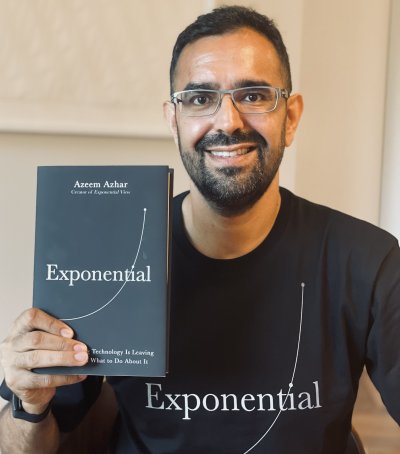
Reclaiming the technology juggernaut: A review of Azeem Azhar’s ‘Exponential’

  • Azeem Azhar, Exponential: How Accelerating Technology Is Leaving us Behind and What to Do About It, Cornerstone, 2021
Azeem Azhar

The central message of Azeem Azhar’s new book, ‘Exponential’, is that technology is a force that humanity can direct, rather than a force which will enslave us.  This may seem optimistic, given the alarmingly fast rate of change which new technologies are bringing about in the world, but as well as explaining in clear terms why these changes are happening so fast and why this is a problem, the book also sets out a manifesto for how we can match technology to meet human needs and begin to address some of the social impacts of rapid change.

‘Exponential’ identifies four key technology domains which form the bedrock of the global economy and where capabilities are accelerating at ever-increasing rates while, at the same time costs are plummeting.  The four technologies are computer science, where improvements are driven by faster processors and access to vast data sets; energy, where renewables are causing the price of generating power to drop rapidly; the life sciences, where gene sequencing and synthetic biology are allowing us to develop novel biological components and systems, and manufacturing, where 3D printing is enabling the rapid, localized production of anything from a concrete building to plant-based steaks.  These are all ‘general purpose technologies’: just like electricity, the printing press, and the car, they have broad utility and the potential to change just about everything.

However, while these technologies are taking off at an exponential rate, society has been unable to keep up.  Businesses, laws, markets, working patterns, and other human institutions have at the same time been able to evolve only incrementally and are struggling to adapt.  Azhar calls this the ‘exponential gap’ – the rift between the potential of the technologies and the different types of management that they demand.  Understanding the exponential gap can help explain why we are now facing technology-induced problems like market domination by ‘winner takes all’ businesses such as Amazon, the gig economy, and the spread of misinformation on social media.

The book detail the impacts of the exponential growth in technology on business and employment as well as on geopolitical issues such as trade, conflict, and the global balance of power.  It shows how the ‘exponential gap’ is shaping relations between citizens and society through the power of tech giants which increasingly provide platforms for our conversations and relationships while collecting and commodifying data about us in order to manipulate our choices. Read more

Humans First: A Manifesto for the Age of Robotics. A review of Frank Pasquale’s ‘New Laws of Robotics’

In 2018, the hashtag #ThankGodIGraduatedAlready began trending on China’s Weibo social media platform.  The tag reflected concerns among Chinese students that schools had begun to install the ‘Class Care System’, developed by the Chinese technology company Hanwang.  Cameras monitor pupils’ facial expressions with deep learning algorithms identifying each student, and then classifying their behaviour into various categories – “focused”, “listening”, “writing”, “answering questions”, “distracted”, or “sleeping”. Even in a country where mass surveillance is common, students reacted with outrage.

There are many technological, legal, and ethical barriers to overcome before machine learning can be widely deployed in such ways but China, in its push to overtake the US as world’s leader in artificial intelligence (AI), is racing ahead to introduce such technology before addressing these concerns.  And China is not the only culprit.

Frank Pasquale’s book ‘The New Laws of Robotics: Defending Human Expertise in the Age of AI’ investigates the rapidly advancing use of AI and intelligent machines in an era of automation, and uses a wide range of examples – among which the ‘Class Care System’ is far from the most sinister – to highlight the threats that the rush to robotics poses for human societies.  In a world dominated by corporations and governments with a disposition for centralising control, the adoption of AI is being driven by the dictates of neoliberal capitalism, with the twin aims of increasing profit for the private sector and cutting costs in the public sector.  Read more

Book Review: The Drone Age by Michael J. Boyle

The Drone Age: How Drone Technology Will Change War and Peace is a great introduction for anyone looking to get an overview of the important issues surrounding the use of military drones. It is clear, engaging and full of insight, as a result of the authors expertise in the field. For those who already very familiar with military drones, there is less that is unexpected but some of the historical context may be new and is certainly worth understanding. The book brings together a substantial amount of information and is highly recommended for people seeking to understand the origins of drone use and the reasons this technology is changing warfare.

Rather than hype up the dangers and speculate about a dystopian future, the book is a well-balanced explanation of where we are, how we got here, what changes are likely to take place in the near future and why the technology itself is ‘disruptive’ (an argument Drone Wars UK has consistently made). The book charts the different ways in which drones have changed numerous practices of war, balancing out the sometimes predictable focus on hunter-killer missions of Predators and Reapers with the surveillance and targeting support that are the work of the majority of most drone operations. Yet Boyle makes clear that these less headline-grabbing operations have also contributed to a step-change in warfare. ‘The Drone Age’ does not stop there however, and looks at the way in which drones have changed peace-keeping and domestic surveillance. The focus is mainly on state (military and police) use but it also covers the UN, human rights organisations, terrorist and rebel groups, and more. Read more